Welcome
You are about to learn the fundamentals of emergency medicine: the knowledge that EMTs use every day to keep people alive.
An Emergency Medical Technician is the first medical professional on scene. Before the hospital, before the surgeon, before the specialist: there is the EMT.
EMTs operate under a defined scope of practice set by each state. They are not doctors. They do not diagnose. They assess, stabilize, & transport. That constraint is what makes EMS work: fast, focused, protocol-driven care.
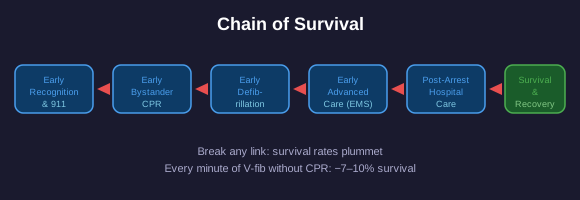
The chain of survival describes the sequence that gives a critically ill or injured patient the best chance: early recognition, early 911 activation, early CPR, early defibrillation, early advanced care, & post-cardiac-arrest care. Break any link & survival rates plummet.
This lesson covers the core competencies tested on the NREMT: patient assessment, airway management, shock & bleeding control, & medical emergencies.
Warm-Up
Quick Check-In
Before we get into protocols, let us see where you start from.
Scene Size-Up
Scene Size-Up: Before You Touch the Patient
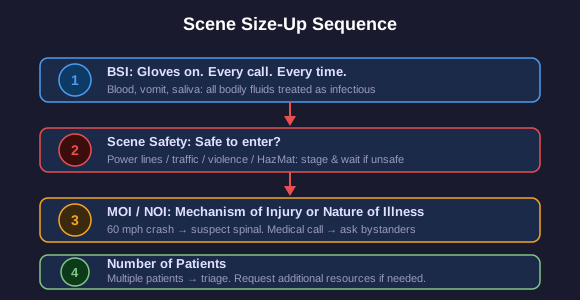
The first thing an EMT does on every call is not rush to the patient. It is a scene size-up.
BSI (Body Substance Isolation): Gloves on. Every time. Blood, vomit, saliva, all bodily fluids are treated as potentially infectious. This protects you & the patient.
Scene safety: Is the scene safe to enter? Downed power lines, traffic, violent individuals, hazardous materials, structural collapse. A dead EMT saves nobody. If the scene is not safe, you stage & wait for the appropriate agency (fire, police, HazMat).
Mechanism of injury (MOI) or nature of illness (NOI): Trauma call? Look at the mechanism. A car wreck at 60 mph tells you to suspect spinal injury before you even see the patient. Medical call? Ask bystanders what happened.
Number of patients: One patient or twenty? If multiple, you triage. You may need additional resources.
Only after the scene size-up is complete do you approach the patient.
Primary Survey
The Primary Survey: Find & Fix What Kills First
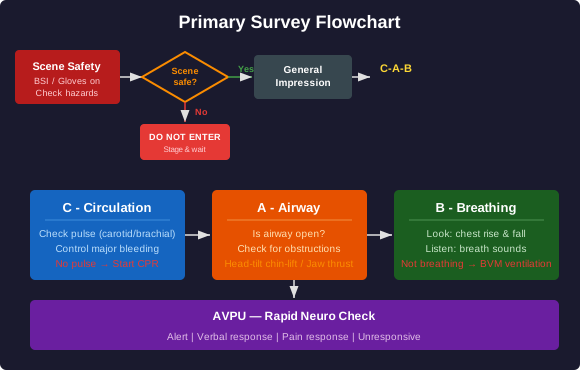
The primary survey is a rapid, systematic assessment designed to find life threats in under 60 seconds.
The current standard follows CAB: Circulation, Airway, Breathing, which replaced the older ABC sequence after the 2010 AHA guidelines. The change reflects evidence that chest compressions should not be delayed.
C: Circulation: Check for a pulse (carotid in adults, brachial in infants). Look for major bleeding. No pulse? Start CPR. Major hemorrhage? Control it immediately.
A: Airway: Is the airway open? Can the patient speak? Look for obstructions, blood, vomit, or tongue displacement. If the airway is compromised, open it with a head-tilt chin-lift (or jaw thrust if spinal injury is suspected).
B: Breathing: Is the patient breathing? Look at the chest for rise & fall. Listen for breath sounds. Feel for air movement. If not breathing, ventilate with a BVM (bag-valve mask).
AVPU is a rapid neurological check: is the patient Alert, responsive to Verbal stimuli, responsive to Pain, or Unresponsive?
SAMPLE History
SAMPLE: The Patient Interview
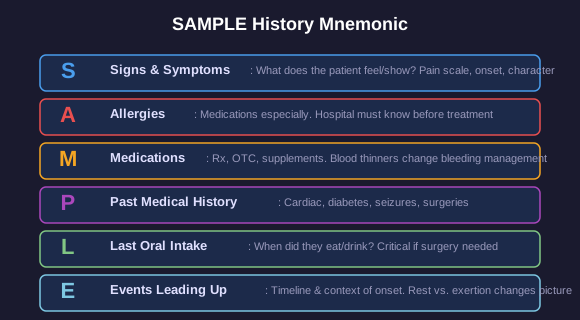
Once the primary survey is done & life threats are managed, you gather a focused history using the SAMPLE mnemonic:
S: Signs & Symptoms: What is the patient experiencing? Pain? Shortness of breath? Dizziness? Signs are what you observe (pale skin, rapid pulse). Symptoms are what the patient reports (chest pain, nausea).
A: Allergies: Medication allergies especially. This matters for what the hospital can give them.
M: Medications: What are they taking? Prescription, over-the-counter, supplements. Blood thinners change bleeding management. Insulin tells you they are diabetic.
P: Past medical history: Cardiac history? Diabetes? Seizure disorder? Previous surgeries?
L: Last oral intake: When did they last eat or drink? This matters for anesthesia if surgery is needed.
E: Events leading up: What were they doing when this started? Timeline matters. Chest pain that started three hours ago during exertion is a different clinical picture than chest pain that started ten minutes ago at rest.
SAMPLE is not a checklist to rush through. It is a conversation that builds a clinical picture for the receiving hospital.
Airway Anatomy and Techniques
Airway: If They Cannot Breathe, Nothing Else Matters
The airway is the path air takes from the nose & mouth to the lungs. Obstruction at any point along this path is immediately life-threatening.
Key anatomy: Air enters through the nose or mouth, passes through the pharynx (throat), through the larynx (voice box) past the epiglottis (the flap that keeps food out of the airway), through the trachea (windpipe), & into the bronchi & lungs.
The most common airway obstruction in an unconscious patient is the tongue. When a person loses consciousness, the muscles relax & the tongue falls back against the posterior pharynx, blocking airflow.
Head-tilt chin-lift: The default airway maneuver. One hand on the forehead tilts the head back. Two fingers under the chin lift the jaw forward. This pulls the tongue off the back of the throat. Do NOT use this if spinal injury is suspected.
Jaw thrust: The spinal-safe alternative. Kneel behind the patient's head, place your fingers behind the angles of the jaw, & push the jaw forward without moving the neck. This opens the airway while maintaining cervical spine alignment.

Airway Adjuncts and Ventilation
Airway Adjuncts & Assisted Ventilation
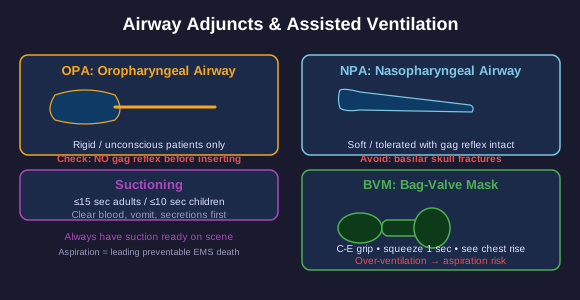
OPA (Oropharyngeal Airway): A rigid, curved plastic device inserted into the mouth to hold the tongue off the posterior pharynx. Only used in unconscious patients with no gag reflex. If the patient gags, remove it immediately, you will cause vomiting & aspiration.
NPA (Nasopharyngeal Airway): A soft, flexible tube inserted through the nostril into the nasopharynx. Tolerated by semiconscious patients who still have a gag reflex. Contraindicated in suspected basilar skull fractures (the tube could enter the cranial vault).
Suctioning: Blood, vomit, secretions, & foreign bodies must be cleared from the airway. Suction for no more than 15 seconds at a time in adults (10 seconds in children) to avoid hypoxia. Always have suction ready, aspiration is a leading cause of preventable death in EMS.
BVM (Bag-Valve Mask): The primary tool for assisted ventilation. Create a seal over the mouth & nose using the C-E grip (thumb & index finger form a C on the mask, remaining fingers form an E on the jaw). Squeeze the bag over 1 second, delivering just enough volume to see the chest rise. Over-ventilation causes gastric distension, vomiting, & aspiration.
Understanding Shock
Shock: When the Body Cannot Perfuse
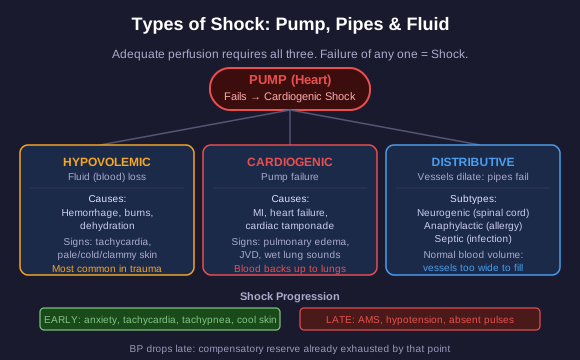
Shock is inadequate tissue perfusion: the body's cells are not getting enough oxygen & nutrients to survive. Left untreated, shock leads to organ failure & death.
Perfusion requires three things working together: a pump (the heart), pipes (the blood vessels), & fluid (the blood). Shock occurs when any of these fails.
Hypovolemic shock: Not enough fluid. The most common type in trauma. Caused by hemorrhage (blood loss), severe burns, or dehydration. The body compensates by increasing heart rate & constricting peripheral blood vessels (cold, pale, clammy skin).
Cardiogenic shock: The pump fails. The heart cannot pump effectively. Caused by myocardial infarction (heart attack), heart failure, or cardiac tamponade. The blood backs up, causing pulmonary edema (fluid in the lungs).
Distributive shock: The pipes dilate. Blood vessels expand & blood pressure drops even though blood volume is normal. Three subtypes: neurogenic (spinal cord injury disrupts vasomotor tone), anaphylactic (severe allergic reaction), & septic (overwhelming infection).
Early signs of shock: anxiety, restlessness, tachycardia (fast heart rate), tachypnea (fast breathing), pale or cool skin. Late signs: altered mental status, hypotension, weak or absent pulses. By the time blood pressure drops, the patient has lost significant compensatory reserve.
Hemorrhage Control
Bleeding Control: Stop the Red Stuff from Leaving
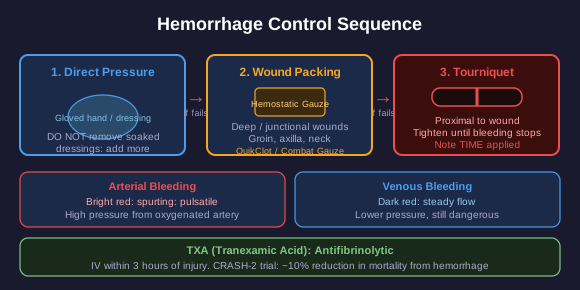
Uncontrolled hemorrhage is the leading cause of preventable death in trauma. The priorities are simple & sequential:
1. Direct pressure: Apply firm, direct pressure to the wound with a gloved hand or dressing. Do not remove blood-soaked dressings, add more on top. Removing dressings disrupts clot formation.
2. Wound packing: For deep wounds (especially junctional areas like the groin, axilla, & neck), pack hemostatic gauze (like QuikClot Combat Gauze) directly into the wound & apply pressure. This is a skill that has migrated from military medicine into civilian EMS based on battlefield evidence.
3. Tourniquets: For life-threatening extremity hemorrhage that direct pressure cannot control. Apply the tourniquet proximal (closer to the heart) to the wound, tighten until bleeding stops, & note the time of application. Modern evidence shows that properly applied tourniquets are safe for several hours & save lives. The old fear of 'losing the limb' was based on outdated data, uncontrolled hemorrhage kills faster.
TXA (Tranexamic Acid): An antifibrinolytic drug that prevents clot breakdown. Administered IV within 3 hours of injury in significant hemorrhage. The CRASH-2 trial showed TXA reduces death from bleeding by approximately 10%. Many EMS systems now carry it.
Cardiac Arrest and CPR
Cardiac Arrest: CPR & Defibrillation
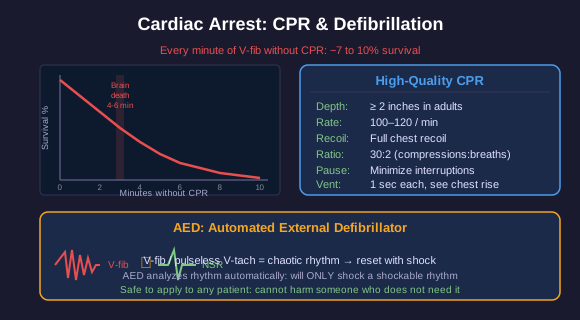
Cardiac arrest means the heart has stopped pumping effectively. Without blood flow, the brain begins to die within 4-6 minutes. CPR buys time by manually circulating blood until the heart can be restarted.
High-quality CPR: Push hard (at least 2 inches deep in adults), push fast (100-120 compressions per minute), allow full chest recoil between compressions, minimize interruptions. The compression-to-ventilation ratio for adults is 30:2 (30 compressions, 2 breaths) with one or two rescuers using a BVM.
AED (Automated External Defibrillator): Most cardiac arrests are caused by ventricular fibrillation (V-fib) or pulseless ventricular tachycardia (V-tach), which are chaotic electrical rhythms. The AED analyzes the rhythm & delivers a shock to reset the heart's electrical system. It will only shock a shockable rhythm, you cannot harm someone by applying an AED.
Every minute without CPR & defibrillation, survival from V-fib decreases by 7-10%. This explains why bystander CPR & public-access AEDs save lives.
Stroke, Diabetic Emergencies, and Seizures
Stroke: Time Is Brain
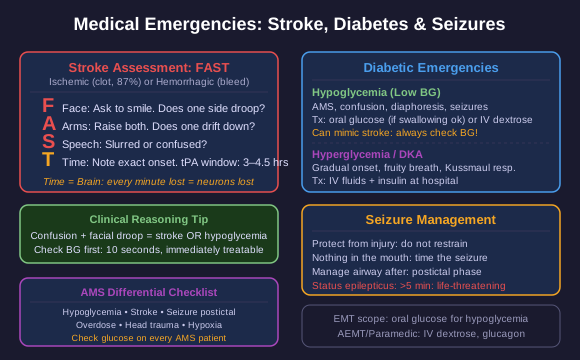
A stroke occurs when blood flow to part of the brain is interrupted: either by a clot (ischemic, 87% of strokes) or a ruptured blood vessel (hemorrhagic). Use the FAST assessment:
F: Face: Ask the patient to smile. Does one side droop?
A: Arms: Ask them to raise both arms. Does one drift downward?
S: Speech: Ask them to repeat a simple sentence. Is their speech slurred or confused?
T: Time: Note the exact time symptoms started. This determines eligibility for clot-busting drugs (tPA must be given within 3-4.5 hours of symptom onset).
Diabetic Emergencies
Hypoglycemia (low blood sugar), Altered mental status, confusion, diaphoresis (sweating), shakiness, seizures. Treat with oral glucose if the patient can swallow safely, or IV dextrose. This kills fast & is easily treatable, always check blood glucose on altered mental status patients.
Hyperglycemia / DKA (diabetic ketoacidosis): Gradual onset, fruity breath odor (acetone), Kussmaul breathing (deep, rapid respirations), dehydration, altered mental status. This is a Type 1 diabetes emergency requiring IV fluids & insulin at the hospital.
Seizures
Most seizures are self-limiting (under 5 minutes). EMT priorities: protect the patient from injury, do not restrain them, do not put anything in their mouth, time the seizure, maintain the airway after the seizure ends (postictal phase). Status epilepticus, a seizure lasting more than 5 minutes or repeated seizures without regaining consciousness, is a life-threatening emergency.
Career Pathways in EMS
EMS Career Pathways: From EMT-B to Flight Medic
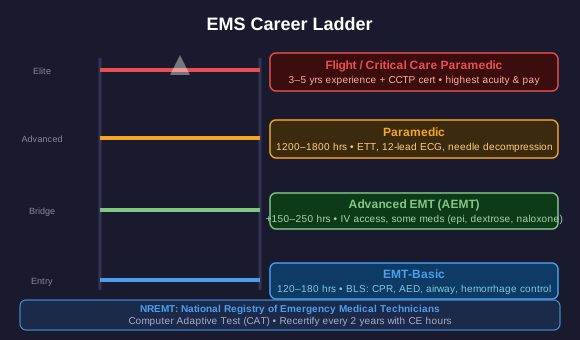
Emergency Medical Services is a structured career ladder with increasing scope of practice at each level.
EMT-Basic (EMT-B): The entry point. Approximately 120-180 hours of training. Can perform BLS (basic life support): CPR, AED, oxygen administration, basic airway management (OPA/NPA, BVM), splinting, hemorrhage control, & vital signs. Cannot start IVs, administer most medications, or perform advanced airway procedures. This is where everyone starts.
Advanced EMT (AEMT): A bridge level. Adds IV access, fluid administration, some medication administration (epinephrine, dextrose, nitrous oxide, naloxone depending on state protocols), & supraglottic airway devices. Approximately 150-250 additional hours beyond EMT-B.
Paramedic: The highest prehospital certification. 1,200-1,800 hours of training including clinical rotations. Paramedics perform advanced airway management (endotracheal intubation), 12-lead ECG interpretation, cardiac medication administration, needle decompression for tension pneumothorax, surgical cricothyrotomy, & IV/IO medication administration. Paramedics function under physician medical direction.
Work Settings
Fire-based EMS: Many fire departments run ambulances. Firefighter/EMTs & firefighter/paramedics handle both fire suppression & medical calls. Fire-based EMS typically offers better pay & benefits.
Private ambulance companies: Handle 911 calls, interfacility transfers, & standby events. Often the first employer for new EMTs. Pay is historically lower but improving.
Hospital-based EMS: Some hospital systems operate their own ambulance services. May offer tuition benefits & pathways into nursing or PA programs.
Flight/critical care: Flight paramedics & flight nurses staff helicopter & fixed-wing air ambulances. Requires extensive experience (typically 3-5 years as a ground paramedic) plus additional training in critical care transport. The highest acuity & highest pay in prehospital medicine.
Certification
The NREMT (National Registry of Emergency Medical Technicians) administers the national certification exam. Most states require or accept NREMT certification. The exam uses computer adaptive testing (CAT): the difficulty adjusts based on your answers. Recertification requires continuing education hours every 2 years.
Career Reflection
Wrapping Up
Here is what you covered today:
- Scene safety & BSI come before everything else
- The primary survey (CAB) finds & fixes life threats in under 60 seconds
- SAMPLE gives you the patient history the hospital needs
- Airway obstruction in unconscious patients is usually the tongue: jaw thrust protects the spine
- Hemorrhage control follows a sequence: direct pressure, wound packing, tourniquet
- Shock is inadequate perfusion & has multiple causes (pump, pipes, fluid)
- Cardiac arrest survival depends on early CPR & defibrillation
- Hypoglycemia can mimic stroke: always check blood glucose
- EMS careers range from EMT-B to flight paramedic, with increasing scope at each level
Emergency medicine is protocol-driven for a reason: when seconds matter, systematic thinking saves lives. Every protocol you learned today exists because someone died when it was not followed.