Welcome
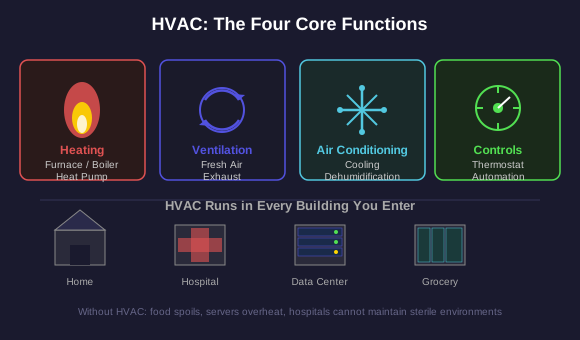
Every building you walk into, your house, a grocery store, a hospital, a data center, has an HVAC system working behind the walls & on the roof to keep the air at the right temperature, humidity, & quality.
HVAC stands for Heating, Ventilation, & Air Conditioning. It is the trade & engineering discipline responsible for indoor climate control. Without HVAC technicians, food spoils in warehouses, servers overheat in data centers, hospitals cannot maintain sterile environments, & homes become unlivable in extreme weather.
This is one of the largest & fastest-growing skilled trades in the world. The work combines mechanical systems, electrical controls, thermodynamics, & hands-on troubleshooting in a career that cannot be outsourced or automated.
In this lesson, we will cover the thermodynamics that make heating & cooling possible, the refrigeration cycle at the heart of every air conditioner & heat pump, how furnaces & boilers generate heat, how ductwork distributes conditioned air, & how to get started in the trade.
Warm-Up
Before we dig into the systems, let us see what you already know or have noticed.
Heat Transfer and BTUs
The Science Behind Comfort
HVAC is applied thermodynamics. Every heating & cooling system works by moving heat from one place to another. The first law of thermodynamics tells us that energy cannot be created or destroyed: only transferred. An air conditioner does not create cold. It moves heat from inside the building to outside.
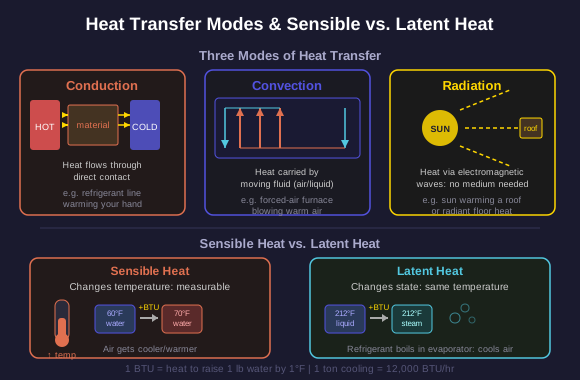
BTU (British Thermal Unit): The standard unit of heat energy in the HVAC trade. One BTU is the amount of heat required to raise one pound of water by one degree Fahrenheit. A typical residential AC system is rated at 24,000 to 60,000 BTUs per hour. One ton of cooling equals 12,000 BTU/hr, this comes from the amount of heat needed to melt one ton of ice in 24 hours.
Three modes of heat transfer:
Conduction: Heat moving through direct contact between materials. A hot copper refrigerant line warming your hand is conduction. Heat flows through the walls of a heat exchanger by conduction.
Convection: Heat carried by moving fluid (air or liquid). A forced-air furnace heats air & a blower pushes it through ducts, that is convection. The refrigerant flowing through the system carries heat by convection.
Radiation: Heat transferred by electromagnetic waves without a medium. The sun warming a roof is radiation. Radiant floor heating warms objects directly without heating the air first.
Sensible heat vs. latent heat: Sensible heat changes the temperature of a substance & you can measure it with a thermometer. Latent heat changes the state of a substance (liquid to gas or gas to liquid) without changing its temperature. In HVAC, latent heat is critical because the refrigerant absorbs enormous amounts of heat when it evaporates from liquid to gas inside the evaporator coil. That phase change is what makes air conditioning possible.
Sensible vs. Latent Heat
On a humid summer day, you walk into an air-conditioned building. The air feels cooler & drier than outside. You notice water dripping from a condensate drain line near the indoor unit.
Four Components, One Loop
The Heart of Every AC & Heat Pump
The vapor-compression refrigeration cycle is the engine that drives every air conditioner, heat pump, refrigerator, & freezer. It moves heat from a place you want cool to a place where you can dump it. The cycle has four main components connected in a closed loop.
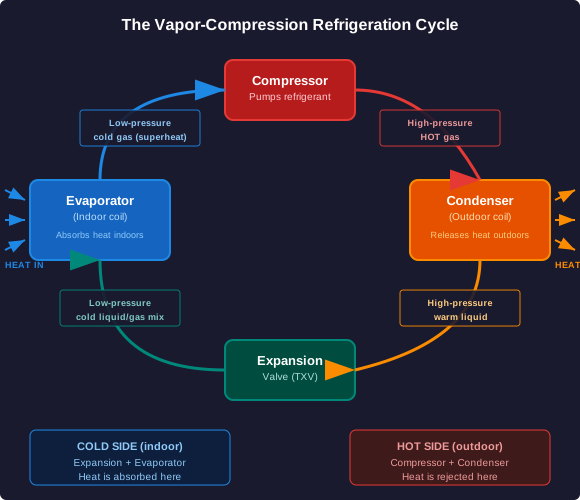
1. Compressor: The pump of the system. It takes low-pressure, low-temperature refrigerant vapor from the evaporator & compresses it into high-pressure, high-temperature vapor. Compression adds energy to the refrigerant, raising its temperature well above the outdoor air temperature so it can reject heat outside. The compressor is the most expensive component & the one that consumes the most electricity.
2. Condenser (outdoor coil): The high-pressure, high-temperature vapor enters the condenser coil. A fan blows outdoor air across the coil. Because the refrigerant is hotter than the outdoor air, heat transfers from the refrigerant to the air. The refrigerant releases its heat (including the latent heat it absorbed inside) & condenses from a vapor into a high-pressure liquid. Subcooling is the additional cooling of the liquid below its condensing temperature, it ensures all the refrigerant is fully liquid before it reaches the expansion device.
3. Expansion device (metering device): The high-pressure liquid passes through a restriction, a thermostatic expansion valve (TXV) or a fixed orifice. The sudden pressure drop causes the refrigerant's boiling point to plummet. Part of the liquid flashes to vapor, & the temperature drops dramatically. The refrigerant is now a cold, low-pressure mix of liquid & vapor.
4. Evaporator (indoor coil): The cold refrigerant enters the evaporator coil. Indoor air is blown across the coil by the blower motor. The refrigerant absorbs heat from the warm indoor air & evaporates from liquid to gas. Superheat is the additional heating of the vapor above its boiling point, it ensures all the refrigerant is fully vaporized before it returns to the compressor, because liquid slugging into a compressor can destroy it.
The cycle repeats continuously: compress, condense, expand, evaporate. Heat is absorbed indoors & rejected outdoors.
Refrigerants: The working fluid in the cycle. R-22 (Freon) was the standard for decades but is now phased out due to ozone depletion. R-410A replaced it in most residential systems. R-454B is the next generation, with lower global warming potential. Handling refrigerants requires EPA Section 608 certification, venting refrigerant to the atmosphere is a federal violation.
Tracing the Cycle
A homeowner calls & says their air conditioner is running but not cooling. You arrive & find the outdoor unit's fan is spinning, the compressor is running, & the indoor blower is moving air. But the air coming out of the supply vents is warm. You check the refrigerant lines & notice the large suction line (which should be cold & sweating with condensation) is warm to the touch.
Furnaces, Heat Pumps, and Boilers
How Buildings Get Warm
While air conditioning dominates summer work, heating systems keep HVAC technicians busy through the winter. The three main heating technologies each have distinct operating principles.
Gas furnace: Burns natural gas or propane in a combustion chamber. The hot combustion gases pass through a heat exchanger, a set of metal tubes or a clamshell assembly. Indoor air blows across the outside of the heat exchanger, picks up the heat, & is distributed through the ductwork. The combustion gases exhaust to the outdoors through a flue or PVC vent pipe. A cracked heat exchanger is one of the most dangerous failures in HVAC: it allows carbon monoxide (CO) to mix with the indoor air supply. Annual combustion analysis (checking CO levels, gas pressure, temperature rise, & flue draft) is critical safety work.
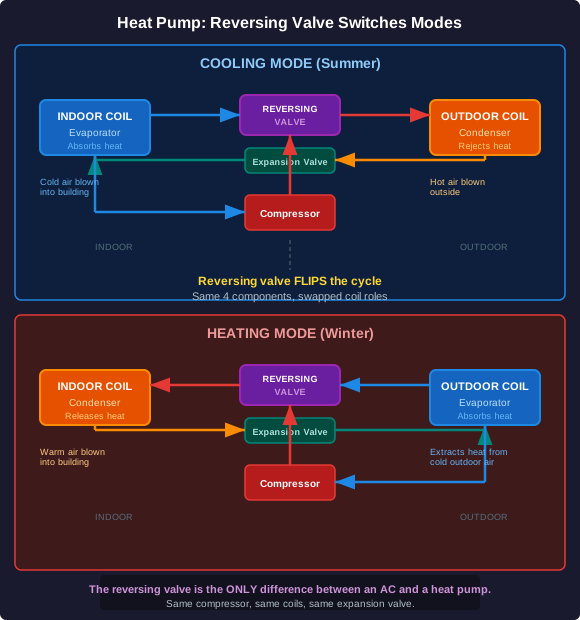
Heat pump: The same refrigeration cycle as an air conditioner, but with a reversing valve that switches the direction of refrigerant flow. In cooling mode, it moves heat from inside to outside, just like a standard AC. In heating mode, the reversing valve flips, & the system moves heat from the outdoor air into the building. The outdoor coil becomes the evaporator (absorbing heat from outside air) & the indoor coil becomes the condenser (releasing heat inside). Heat pumps can extract heat from outdoor air even at low temperatures, though their efficiency drops as the temperature falls. Most heat pump systems include auxiliary electric resistance heat strips for extremely cold days.
Boiler: Heats water (hydronic system) or generates steam & distributes it through pipes to radiators, baseboard heaters, or radiant floor tubing. Boilers burn gas, oil, or use electric elements. Hydronic systems are common in older buildings & in commercial applications. Boiler work involves understanding water chemistry, pressure relief valves, expansion tanks, & circulation pumps.
Efficiency ratings: Furnaces are rated by AFUE (Annual Fuel Utilization Efficiency). A 96% AFUE furnace converts 96% of the fuel's energy into heat. Heat pumps are rated by HSPF (Heating Seasonal Performance Factor) for heating & SEER (Seasonal Energy Efficiency Ratio) for cooling. Higher numbers mean higher efficiency.
Heat Pump vs. Furnace
A homeowner in a moderate climate (winters around 30-40 degrees Fahrenheit) asks you whether they should replace their old gas furnace with a heat pump. They want to save money on energy bills & reduce their carbon footprint.
Ductwork, Airflow, and Filtration
Getting the Air Where It Needs to Go
The best furnace or air conditioner in the world is useless if the air distribution system cannot deliver conditioned air to every room. Ductwork design & airflow management are core HVAC skills.
Duct types: Sheet metal (rigid rectangular or round), flex duct (flexible insulated tubes), & duct board (rigid fiberglass panels). Sheet metal is the most durable & efficient. Flex duct is cheaper & easier to install but must be pulled taut, kinked or compressed flex duct kills airflow. Each type has specific applications based on the building, budget, & code requirements.
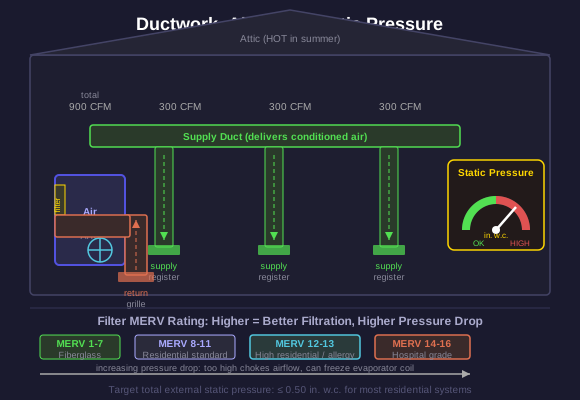
Airflow measurement: Air volume gets measured in CFM (cubic feet per minute). Each room requires a specific CFM based on its size, heat load, & number of occupants. A typical 2,000 square foot house might need 800-1,200 CFM total. Technicians use an anemometer or a flow hood to measure CFM at each register.
Static pressure: The resistance to airflow in the duct system, measured in inches of water column (in. w.c.) with a manometer. Think of it like blood pressure, too high means something is restricting flow (dirty filter, collapsed duct, undersized ductwork). Too low means leaks or a weak blower. The target total external static pressure for most residential systems is 0.50 in. w.c. or less. High static pressure forces the blower to work harder, wastes energy, reduces airflow, & shortens equipment life.
Filtration: Air filters remove dust, pollen, & particulates from recirculated air. Filters are rated by MERV (Minimum Efficiency Reporting Value) from 1 to 20. Standard residential filters are MERV 8-11. Hospital-grade is MERV 13-16. Higher MERV means better filtration but also higher static pressure, a filter that is too restrictive for the system chokes airflow & can freeze the evaporator coil.
Return air: Most systems have supply ducts (delivering conditioned air) & return ducts (pulling air back to the unit for reconditioning). Inadequate return air is one of the most common residential duct problems, it creates pressure imbalances, makes doors slam, & forces the system to work against itself.
Diagnosing Airflow Problems
A homeowner complains that their upstairs bedrooms are always too warm in summer while the downstairs stays comfortable. The system is a single-zone AC with one thermostat located downstairs. The ductwork runs through a hot attic to reach the upstairs registers. You measure the static pressure & find it is 0.85 in. w.c.: well above the 0.50 target.
Getting Into the Trade
HVAC Careers & Certification
HVAC is one of the highest-demand skilled trades in the country. The Bureau of Labor Statistics projects faster-than-average job growth, & experienced technicians are in short supply. The work cannot be offshored: buildings need local technicians who can show up & fix the system.
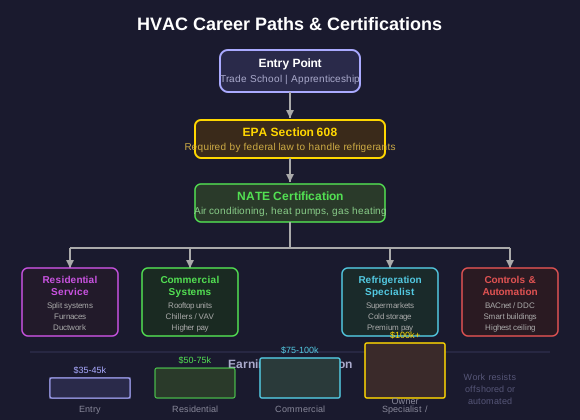
EPA Section 608 Certification: Required by federal law to purchase or handle refrigerants. There are four types: Type I (small appliances), Type II (high-pressure systems like residential AC), Type III (low-pressure systems like large chillers), & Universal (all types). Most HVAC technicians get Universal certification early in their training. The test covers refrigerant handling, recovery, recycling, & environmental regulations.
NATE Certification: North American Technician Excellence, the leading industry certification. NATE tests cover specific system types (air conditioning, heat pumps, gas furnaces, etc.) & validate real-world diagnostic skills. Many employers prefer or require NATE-certified technicians.
Apprenticeship vs. trade school: Trade school programs (6 months to 2 years) teach fundamentals in the classroom & lab. Union apprenticeships (typically 4-5 years) combine classroom instruction with paid on-the-job training under a journeyman. Both paths lead to a career, but apprenticeships pay you while you learn & give you thousands of hours of supervised field experience.
Residential vs. commercial: Residential technicians work on homes, split systems, furnaces, ductwork. Commercial technicians work on larger equipment: rooftop units, chillers, cooling towers, building automation systems, & variable air volume (VAV) systems. Commercial work is more complex & typically pays more.
Specializations: Refrigeration (supermarkets, cold storage, food service), controls & building automation (DDC systems, BACnet, programmable controllers), indoor air quality, energy auditing, & system design. HVAC technicians who learn controls & automation are in especially high demand as buildings get smarter.
Earnings: Entry-level HVAC technicians typically start at $35,000-$45,000. Experienced residential technicians earn $50,000-$75,000. Commercial & industrial technicians with certifications & specializations can earn $75,000-$100,000 or more. Business owners & contractors have no ceiling.
Planning Your Path
Connect HVAC to Your Future
You now know the thermodynamics behind heating & cooling, the refrigeration cycle, how furnaces & heat pumps generate heat, & how ductwork delivers conditioned air to a building.