Welcome
Every building you have ever used: every home, school, hospital, restaurant: depends on plumbing. Turn on a faucet and clean water appears. Flush a toilet and waste disappears. It feels like magic, but it is engineering, physics, and centuries of hard-won knowledge about how to move water safely.
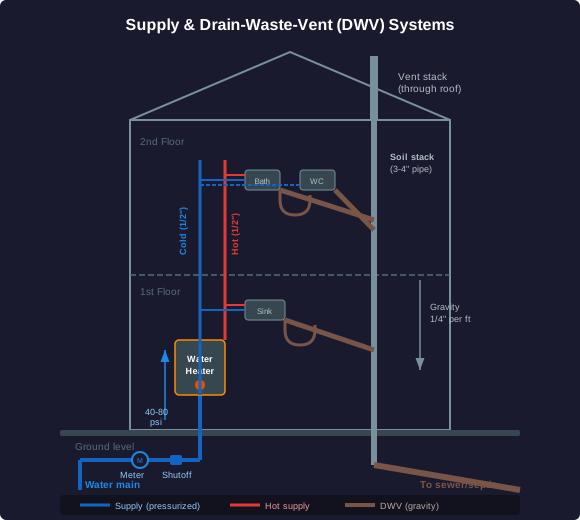
Plumbing is two systems working side by side: the supply system that delivers clean water under pressure, & the drain-waste-vent (DWV) system that removes waste by gravity. They never mix. When they do, people get sick or die. That separation is the single most important principle in plumbing.
This lesson covers how water gets to a building, how it moves through supply pipes, how waste leaves through drains, & how codes & safety practices keep the whole system safe. By the end, you will understand the infrastructure behind every sink, toilet, & shower you have ever used.
Plumbing is also one of the highest-paid trades. It cannot be automated, it cannot be outsourced, & every new building needs it.
Warm-Up
Before We Begin
Think about your morning routine: shower, brushing teeth, flushing the toilet, maybe making coffee.
Water Pressure and Distribution
Pressure Makes It Flow
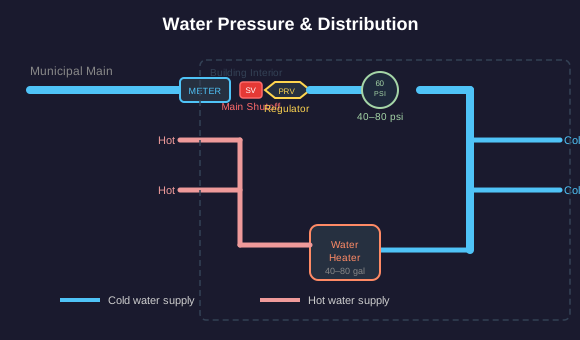
Unlike drainage, which relies on gravity, the supply system operates under pressure. Municipal water systems typically deliver water at 40-80 psi (pounds per square inch). If pressure is too low, your shower dribbles. If it is too high, pipes & fixtures can fail.
Water enters a building through a main supply line: usually 3/4-inch or 1-inch pipe for residential. A water meter measures usage, and a main shutoff valve allows you to cut water to the entire building. Every plumber and homeowner should know where the main shutoff is. When a pipe bursts, the first 30 seconds determine whether you have a puddle or a flood.
Inside the building, the main line branches into smaller lines (typically 1/2-inch) that feed individual fixtures. Hot water lines run from the water heater to fixtures that need hot water. Cold water lines run directly from the main.
Pressure regulators are installed when municipal pressure exceeds 80 psi. Without one, high pressure stresses joints, causes faucets to drip, and can rupture supply lines: especially flexible connectors on toilets and washing machines.
Pipe Materials: Copper vs PEX vs CPVC
Choosing the Right Pipe
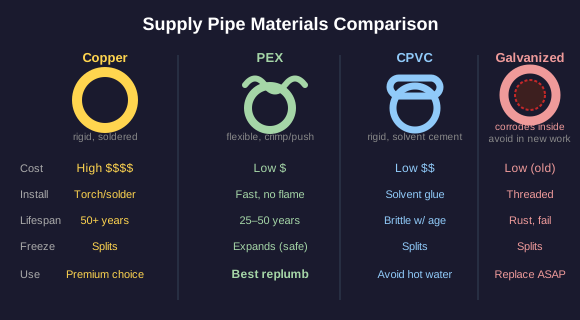
The three main materials for residential water supply lines each have trade-offs:
Copper has been the standard for decades. It resists corrosion, handles heat well, and lasts 50+ years. Rigid copper is joined by soldering (sweating) with flux and a torch. It is expensive: both the material and the labor: but it is proven and universally accepted by code.
PEX (cross-linked polyethylene) is flexible plastic tubing that has revolutionized residential plumbing. It is cheaper than copper, faster to install, resists freezing better (it can expand slightly), and does not corrode. PEX uses crimp rings, push-fit, or expansion fittings: no soldering. The downsides: it cannot be used outdoors (UV degrades it), and some jurisdictions were slow to approve it.
CPVC (chlorinated polyvinyl chloride) is rigid plastic pipe joined with solvent cement (glue). It is cheaper than copper & easier to work with, but it becomes brittle over time, especially in hot water lines. Many plumbers have moved away from CPVC in favor of PEX.
Galvanized steel is the old standard you find in pre-1970s homes. It corrodes from the inside out, restricting flow & eventually leaking. If you see galvanized supply lines, they are living on borrowed time.
Gravity, Traps, and Venting
The Other Half of Plumbing
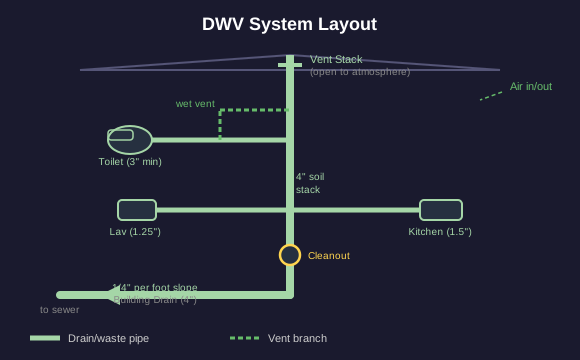
The drain-waste-vent (DWV) system removes used water and waste from the building using gravity: no pumps, no pressure. Every drain pipe must slope downward at a minimum of 1/4 inch per foot. Too little slope and waste does not flow. Too much slope and water outruns solids, leaving them stranded in the pipe.
Every fixture has a trap: the U-shaped bend in the pipe under your sink. The trap holds a small amount of water that acts as a seal against sewer gases. Without traps, your house would smell like a sewer. The P-trap is the most common type. It is called a P-trap because, viewed from the side, it looks like the letter P on its side.
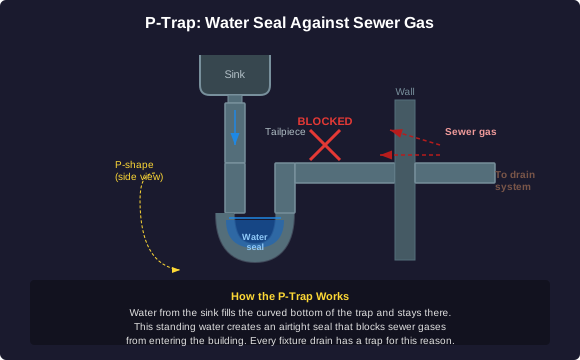
Vent pipes are the part of the DWV system that most people never think about. They run from the drain lines up through the roof, open to the atmosphere. Vents serve two critical purposes: they let sewer gases escape above the roofline instead of into the building, & they allow air into the drain system so water flows freely.
Without venting, draining a sink would create a vacuum that sucks the water out of nearby traps: breaking the seal and letting sewer gas in. Think of putting your thumb over a straw full of water. Remove your thumb (add a vent) and the water flows.
DWV Pipe and System Layout
DWV Materials & Layout
Drain pipes use different materials than supply pipes. The standard for residential DWV is ABS (black plastic) or PVC (white plastic), both joined with solvent cement. Cast iron is found in older homes: it is quiet (dampens the sound of water flowing) but heavy and eventually rusts.
The main vertical drain pipe is called the soil stack or waste stack. It collects drainage from all fixtures and runs down to the building sewer: the pipe that connects to the municipal sewer or septic system. The soil stack extends up through the roof as the vent stack.
Cleanouts are access points in the drain system: capped fittings that allow a plumber to insert a drain snake or camera to clear blockages. Code requires cleanouts at specific intervals and wherever the drain changes direction. A system without accessible cleanouts is a nightmare to maintain.
Drain pipe sizes are matched to fixture load. A toilet requires a minimum 3-inch drain. A lavatory sink can use 1-1/4 inch. The main building drain is typically 4 inches. Undersized drains clog. Oversized drains waste material & do not carry solids effectively.
Faucets, Toilets, and Water Heaters
Where Supply Meets Drain
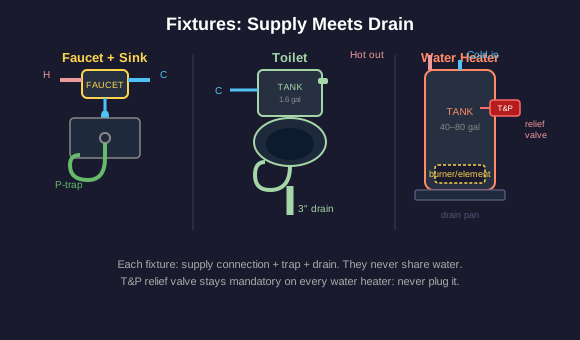
A fixture is any device that connects the supply system to the DWV system: sinks, toilets, showers, bathtubs, dishwashers, washing machines. Each fixture has supply connections (hot and/or cold), a drain, and a trap.
Faucets are valves that control water flow at a fixture. Modern faucets use ceramic disc cartridges that last longer than the old rubber washer designs. Compression faucets (the old type with rubber washers) drip when the washer wears out. Cartridge & ceramic disc faucets fail less often & are easier to repair.
Toilets are gravity-flush fixtures. The tank holds 1.6 gallons (current code maximum) & releases it into the bowl when you press the handle. The rushing water creates a siphon in the trapway that pulls waste down & out. When the siphon breaks (that gurgling sound at the end of a flush), air enters & the bowl refills from the tank.
Water heaters are the bridge between cold supply and hot distribution. Tank-style heaters keep 40-80 gallons hot at all times. Tankless (on-demand) heaters heat water only when a fixture is opened: more efficient but with higher upfront cost. Gas water heaters need proper venting to exhaust combustion gases. Electric water heaters do not vent but draw significant amperage.
Pressure regulators reduce incoming pressure to a safe range (typically set to 50-60 psi). Pressure relief valves on water heaters open if temperature or pressure exceeds safe limits: a critical safety device. Never cap or plug a relief valve. If it is discharging, something is wrong and needs diagnosis, not silencing.
Valves and Supply Stops
Controlling the Flow
Plumbing systems use different valve types for different purposes:
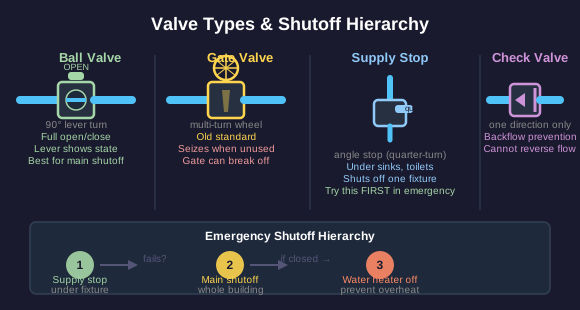
Ball valves use a perforated ball that rotates 90 degrees between open and closed. They are the standard for main shutoffs: full flow when open, complete seal when closed, and reliable after years of sitting idle. The lever handle tells you the state at a glance: parallel to the pipe means open, perpendicular means closed.
Gate valves use a wedge that slides up & down. They were the old standard for main shutoffs but have a critical flaw: they tend to seize in the open position after years of non-use, & the gate can break loose & jam in the pipe. If you see a round handle (like a wagon wheel) on a main shutoff, it is probably a gate valve.
Supply stops (angle stops or straight stops) are the small valves under sinks & behind toilets that control water to individual fixtures. They allow you to shut off one fixture without killing water to the whole house. Quarter-turn stops (ball valve design) are more reliable than multi-turn stops (compression design).
Check valves allow water to flow in only one direction. They are critical components in backflow prevention assemblies.
Plumbing Code and Backflow Prevention
The Rules That Keep Water Safe
The International Plumbing Code (IPC) is the model code adopted (with local amendments) by most US jurisdictions. It governs pipe sizing, fixture placement, venting requirements, materials, & testing. Some areas use the Uniform Plumbing Code (UPC) instead. Either way, plumbing work requires permits & inspections.
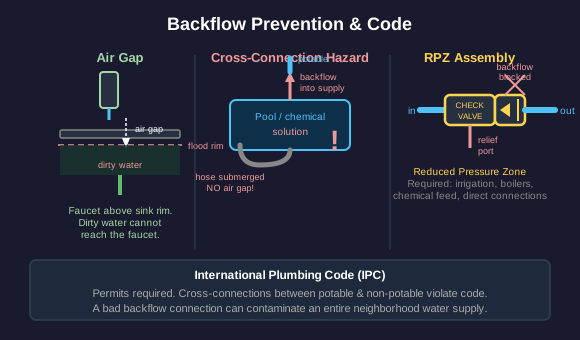
Why permits? Because plumbing mistakes are invisible. Bad wiring trips a breaker. Bad plumbing contaminates drinking water. A cross-connection between potable & non-potable water can sicken an entire neighborhood before anyone realizes the source.
Backflow prevention is one of the most critical code requirements. Backflow occurs when pressure in the supply system drops (a water main break, heavy fire hydrant use) & contaminated water is sucked backward into the clean supply. Every fixture with a potential cross-connection needs protection.
An air gap is the simplest form of backflow prevention: the physical space between a faucet outlet and the flood rim of the fixture. Your kitchen faucet is above the sink rim. If the sewer backed up into the sink, dirty water cannot reach the faucet because of that gap. But a garden hose submerged in a pool with chemicals? No air gap. That is a cross-connection, and it can contaminate your house water: and your neighbors'.
Reduced pressure zone (RPZ) assemblies & double check valves are mechanical backflow preventers used on irrigation systems, boiler feeds, & commercial applications. They are required by code wherever a direct cross-connection exists.
Gas Piping and Permits
Gas: The Lethal Side of Plumbing
Many plumbers also work with natural gas and propane piping. Gas lines supply water heaters, furnaces, ranges, dryers, and fireplaces. Gas work is plumbing: same pipe-fitting skills, same code authority: but the stakes are higher. A water leak makes a mess. A gas leak causes an explosion.
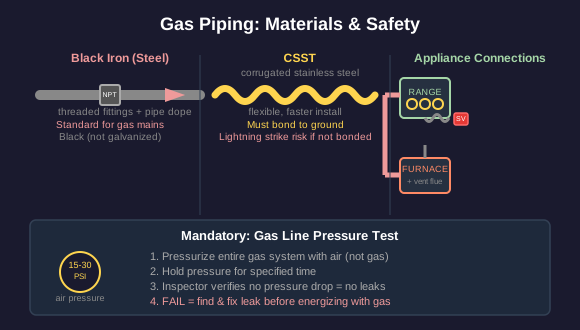
Gas pipe is typically black iron (steel) with threaded fittings & pipe dope or Teflon tape rated for gas. CSST (corrugated stainless steel tubing) is a flexible alternative that installs faster but must be properly bonded to the grounding system to prevent lightning-induced failures.
Gas leak detection is a critical skill. Soap bubbles applied to joints will bubble if gas is leaking. Electronic gas detectors provide faster results. If you smell gas (the rotten egg smell is added artificially: natural gas is odorless), leave the building immediately. Do not flip switches, use phones, or do anything that could create a spark.
Permits are mandatory for gas work. No exceptions. Gas lines must be pressure-tested before being placed in service: typically at 15-30 psi with air for a specified hold time. A failed pressure test means a leak exists and must be found before the line is energized.
Apprentice to Master Plumber
The Plumbing Career Ladder
Like electrical work, plumbing follows a structured apprenticeship path:
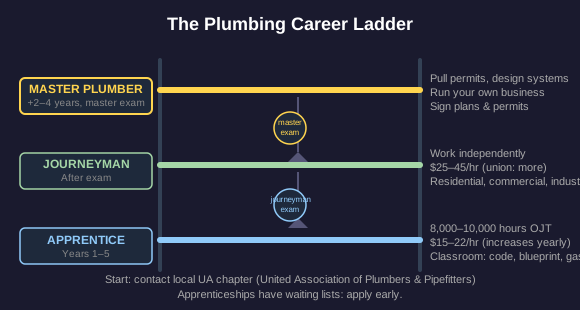
Apprentice (4-5 years): You earn while you learn, working under a journeyman plumber. Apprenticeships typically require 8,000-10,000 hours of on-the-job training plus classroom instruction covering code, blueprint reading, pipe fitting, gas systems, & water treatment. Starting wages range from $15-22/hour & increase annually.
Journeyman Plumber: After completing your apprenticeship & passing the journeyman exam, you can work independently. Journeyman plumbers earn $25-45/hour depending on location, with union plumbers often earning more. You can specialize in residential, commercial, or industrial work.
Master Plumber: Requires additional experience (typically 2-4 more years) & passing the master exam. Master plumbers can pull permits, design plumbing systems, run their own businesses, & supervise other plumbers. In many jurisdictions, only a master plumber can sign off on plans & permits.
Specializations and the Future
Beyond Residential
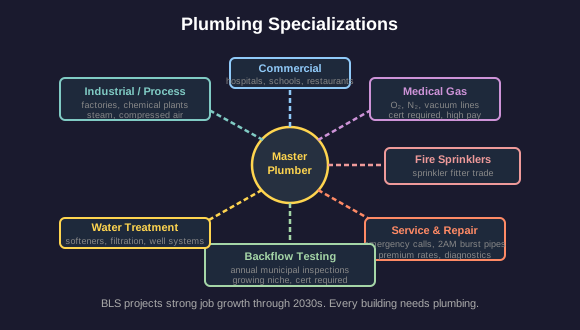
Plumbing is not just fixing leaky faucets. The trade has deep specializations:
Commercial plumbing involves larger pipe, more complex systems, & institutional fixtures. Hospitals, schools, & restaurants have plumbing requirements far beyond residential. Commercial work pays more but requires additional code knowledge.
Medical gas systems: oxygen, nitrogen, vacuum lines in hospitals: are installed and maintained by plumbers with specialized certifications. This is niche, high-skill, high-pay work.
Fire sprinkler systems (sprinkler fitting) is a related trade. Sprinkler fitters design & install fire suppression systems in commercial & residential buildings.
Service and repair is the bread and butter of many plumbing businesses. Emergency calls: burst pipes at 2 AM, sewer backups, no hot water: pay premium rates. A service plumber with diagnostic skills and good customer rapport can earn well above journeyman scale.
Water treatment and backflow testing is a growing niche. Certified backflow testers inspect and maintain backflow prevention devices: required annually by many municipalities.
The Bureau of Labor Statistics projects strong job growth for plumbers through the 2030s. Aging infrastructure means more repair & replacement work. New construction means new installations. And every building, everywhere, needs plumbing.